


Page 38 - MHM Report-2023
P. 38
Success of Sakhis:


            Building community outreach


                  or Sonal Kanwar from Lotana village in      me. Women approach me frequently for advice on
                  Rajasthan’s Sirohi district, menstruation   menstruation problems and it feels good to see
            Fwas a difficult topic to discuss. This           them talk about it with their families.”
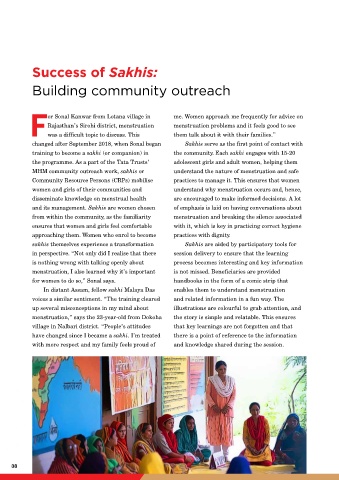
            changed after September 2018, when Sonal began        Sakhis serve as the first point of contact with
            training to become a sakhi (or companion) in      the community. Each sakhi engages with 15-20
            the programme. As a part of the Tata Trusts’      adolescent girls and adult women, helping them
            MHM community outreach work, sakhis or            understand the nature of menstruation and safe
            Community Resource Persons (CRPs) mobilise        practices to manage it. This ensures that women
            women and girls of their communities and          understand why menstruation occurs and, hence,
            disseminate knowledge on menstrual health         are encouraged to make informed decisions. A lot
            and its management. Sakhis are women chosen       of emphasis is laid on having conversations about
            from within the community, as the familiarity     menstruation and breaking the silence associated
            ensures that women and girls feel comfortable     with it, which is key in practicing correct hygiene
            approaching them. Women who enrol to become       practices with dignity.
            sakhis themselves experience a transformation         Sakhis are aided by participatory tools for
            in perspective. “Not only did I realise that there   session delivery to ensure that the learning
            is nothing wrong with talking openly about        process becomes interesting and key information
            menstruation, I also learned why it’s important   is not missed. Beneficiaries are provided
            for women to do so,” Sonal says.                  handbooks in the form of a comic strip that
                In distant Assam, fellow sakhi Malaya Das     enables them to understand menstruation
            voices a similar sentiment. “The training cleared   and related information in a fun way. The
            up several misconceptions in my mind about        illustrations are colourful to grab attention, and
            menstruation,” says the 23-year-old from Dokoha   the story is simple and relatable. This ensures
            village in Nalbari district. “People’s attitudes   that key learnings are not forgotten and that
            have changed since I became a sakhi. I’m treated   there is a point of reference to the information
            with more respect and my family feels proud of    and knowledge shared during the session.


     38

