World Water Day 2026
The Water Budget: A Plan for Every Drop
Water is the foundation of life. Yet across the world, water sources are under growing pressure. Changing rainfall patterns, rising demand, and unsustainable use are making water security one of the defining challenges of our time.
India faces this challenge more acutely. Home to nearly 18% of the world’s population and around 20% of its livestock, but with only about 4% of its freshwater resources, the country must manage its water carefully to ensure communities have reliable access to safe water.
Water stress affects far more than drinking needs. It influences health, sanitation, livelihoods, agriculture, and local economies.
| Year | Per Capita Availability (m3) | Status (Falkenmark Scale) |
|---|---|---|
| 1951 | 5,177 | Water Abundant |
| 1991 | 2,209 | Water Abundant |
| 2001 | 1,816 | Water Abundant |
| 2011 | 1,545 | Water Stressed |
| 2021 | 1,486 | Water Stressed |
| 2031 (Proj.) | 1,367 | Water Stressed |
| 2050 (Proj.) | 1,140 | Approaching Scarcity |
India’s per capita water availability is already below the internationally recognised water stress threshold of 1,700 cubic metres and is moving closer to the scarcity threshold of 1,000 cubic metres. Rising population and economic development are placing increasing pressure on limited water resources.
With summer on the horizon, the strain on water systems becomes more visible. But water scarcity is not merely seasonal. It is a result of how water is managed, shared, and protected over time.
This World Water Day, the Tata Trusts urges everyone to think about water differently. Not just as a resource to save, but as one to plan for collectively.
India’s Water Crisis
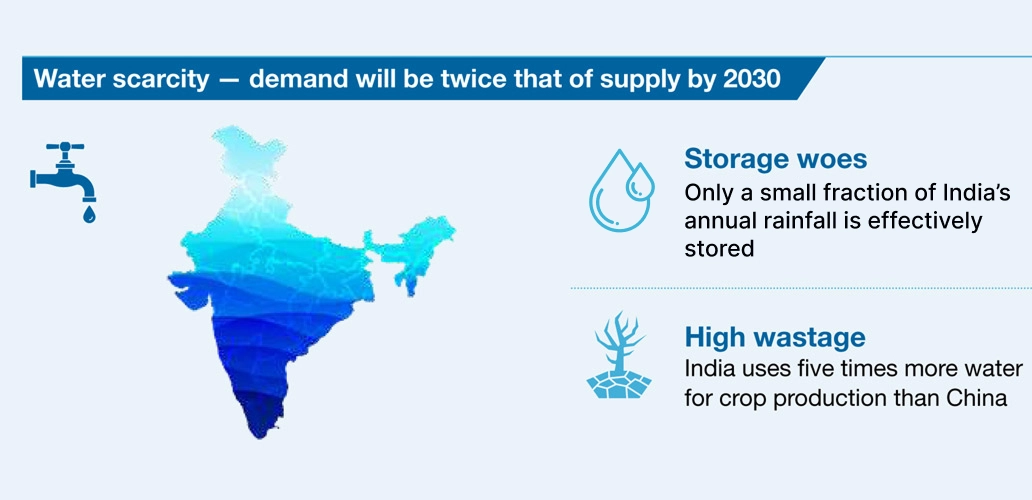
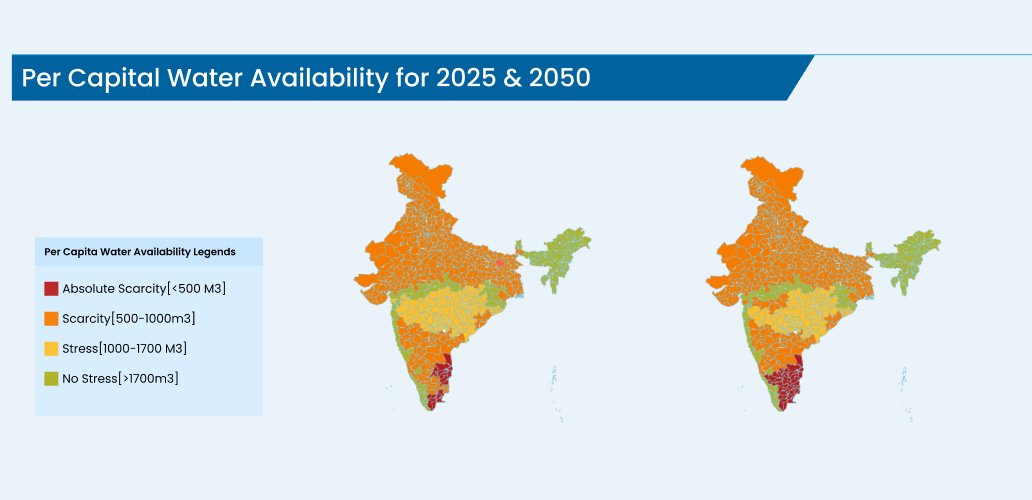
Source: ICED (using data from government/relevant departments)
The Water Budget
Saving water is no longer an act of goodwill. It has become a survival necessity that requires coordinated action from communities and institutions alike.
Every home runs on a budget. We plan expenses, prioritise needs, and ensure resources last through the month. Water security planning works in much the same way. It involves mapping a community’s entire water system, including its water sources, demand, risks, and resilience under stress/crisis conditions. It looks beyond immediate shortages and focuses on the larger picture: how water is generated, stored, distributed, used, and replenished over time.
Water budgeting serves as the analytical backbone of water security planning. It becomes a foundational tool for quantifying both water income (rainfall, recharge, inflows) and water expenditure (domestic use, agriculture, livestock, losses), revealing the overall water balance of a village. Water budgeting converts abstract challenges into concrete numbers. It shows communities exactly how much water they have, how much they use, and whether they are living within their ecological limits.
Water Balance = Inflow – Outflow: This indicates whether a village is in surplus or deficit.
A water budget helps communities by
- Making the invisible visible by revealing actual water availability and use through quantification.
- Identifying surplus or deficit: indicating whether a community is Water Positive, Water Neutral, or Water Negative.
- Supports evidence-based decisions around crop planning, extraction limits, and recharge needs.
- Identify root causes of water scarcity (such as high-water-consuming crops, overextraction, or low recharge capacity) as well as symptoms (like declining groundwater levels, seasonal shortages, or reduced crop productivity)
Through this process, communities allocate water across essential needs such as drinking, sanitation, agriculture, and livelihoods, while also setting aside resources for conservation and recharge.
Water budgeting moves the conversation beyond conservation. It introduces a system of planning, monitoring, and accountability to help communities manage water as a shared, finite resource.
When people understand their water balance, they can make informed decisions to manage water so it remains available not only today but also sustainable for future generations.
From morning tea to evening laundry, water quietly powers our everyday routines. “Every drop counts” is an idea that has long been instilled in us. But how often do we pause to think about how many drops we actually use, or waste, each day?
Click here to find out
From Social Media


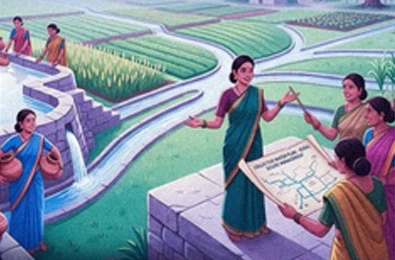
Women at the Centre of Water management
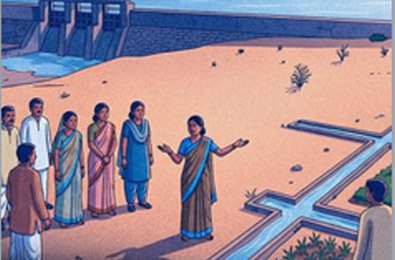
For generations, women have been at the centre of water in households and communities, responsible for collecting, storing, and managing it. In many parts of rural India, this has meant long walks, heavy loads, and hours spent each day. As global conversations, including this year’s World Water Day, focus on water and gender, it's worth noting that women’s relationship with water goes far beyond access. It is deeply tied to equity, time, and opportunity.
Today, that role is evolving.
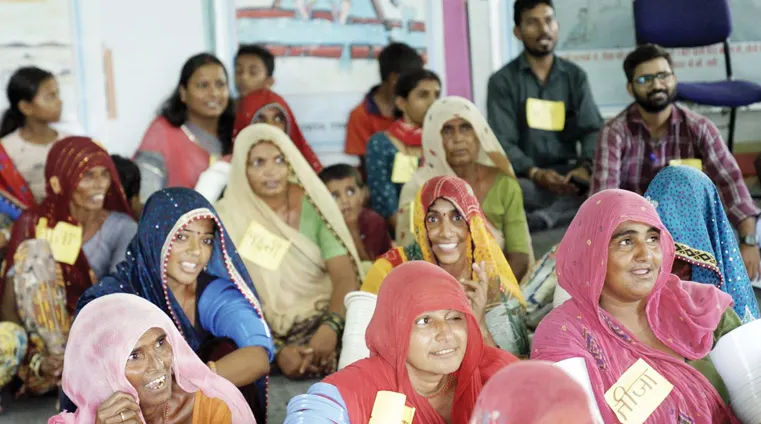
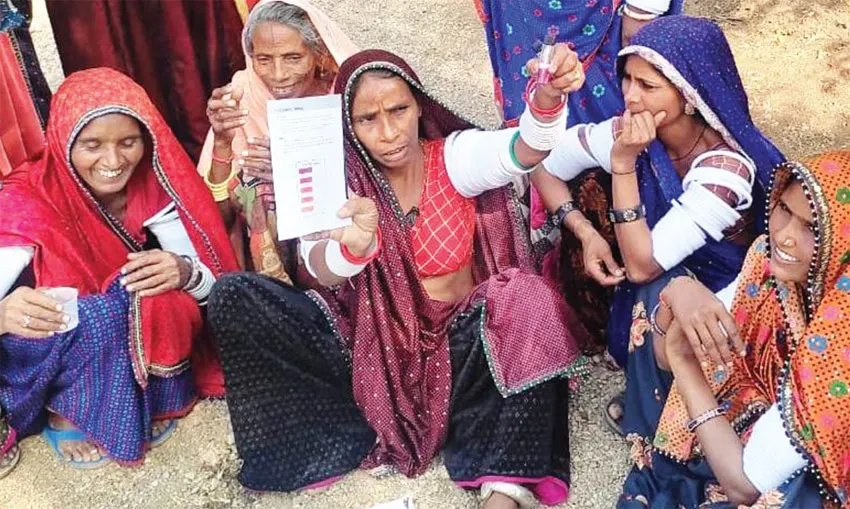
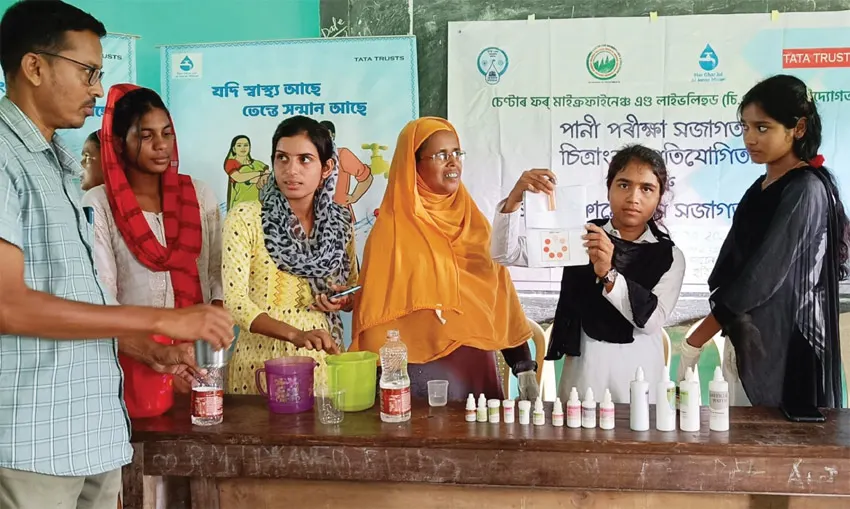
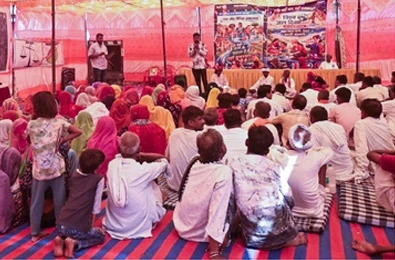
Across villages, women are increasingly stepping forward as leaders in water governance by participating in village water committees, monitoring water quality, and helping communities plan how water is used and conserved. Their involvement brings a deeper understanding of household needs, strengthens community participation, and ensures that water systems respond to the realities of everyday life.
When women are part of water decision-making, the outcomes extend far beyond access. Communities often see improvements in health, sanitation, and time saved, as well as in livelihoods.
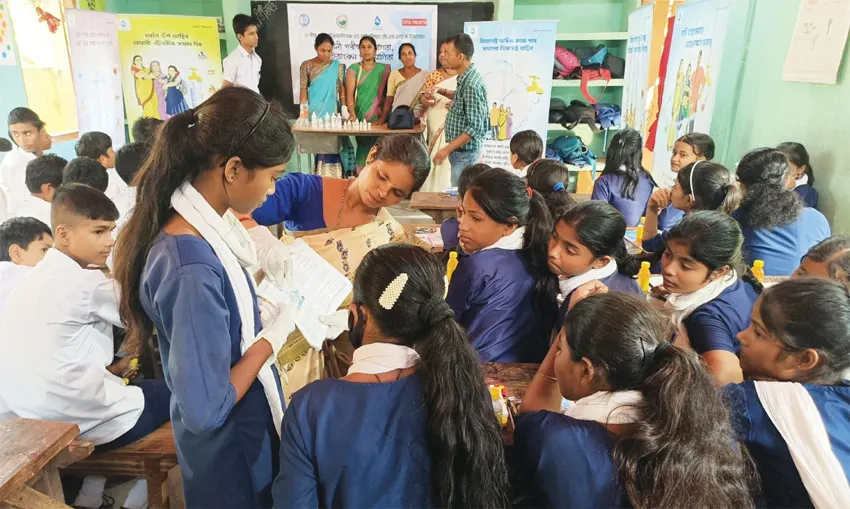
Tata Trusts’ community-led water initiatives place women at the heart of planning and decision-making. From helping develop village water security plans to leading awareness-raising efforts on conservation and hygiene, women are shaping more resilient, sustainable water systems for their communities.
Across India, these stories of change are already unfolding.
Stories from the field
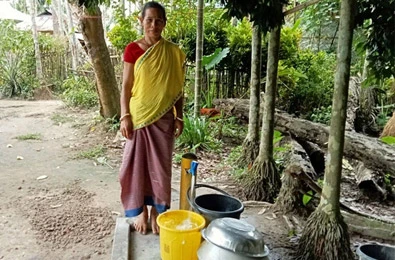
Iron Out, Health In: The Iron Treatment Plant Brings Safe Water to Biswarani
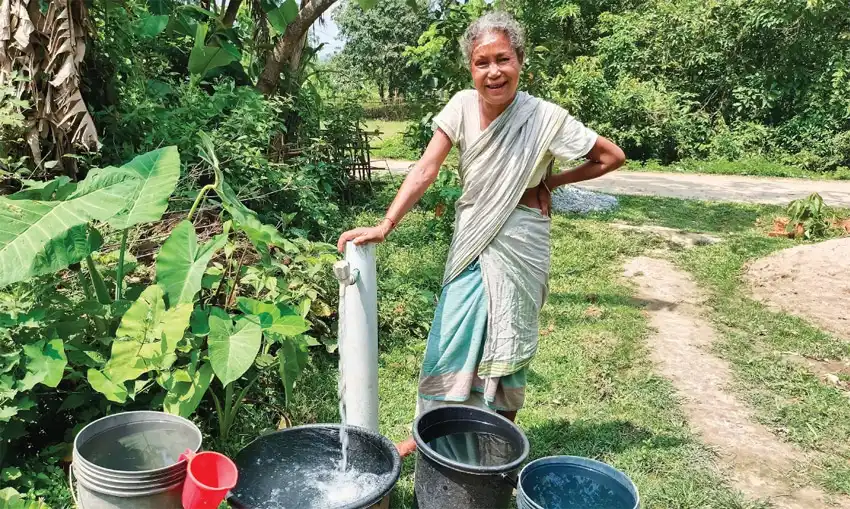
What once was a daily concern for Mina Rani Debbarma—access to safe water—is now a thing of the past. The iron treatment plant has turned a health hazard into a source of wellbeing for her family.
Read More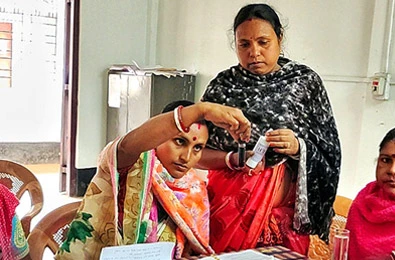
Creating local women water warriors
A Trusts-supported initiative in Tripura showcases the importance of community-led water management
Read More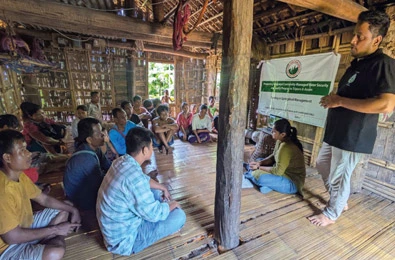
For the sake of water
The ecosystem approach to water management that the Tata Trusts have adopted enables village communities to protect, conserve and secure the most valuable of nature’s resources
Read More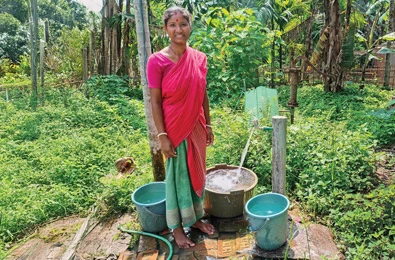
Protecting the precious
Tackling deadly contaminants and rejuvenating natural sources — that’s the two-pronged thrust of the water initiatives in Assam and Tripura
Read More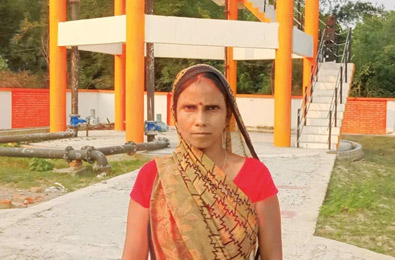
Transcending the Norms
With support from Tata Trusts’ Jal Jeevan Mission, Renu Devi became a water quality monitor, ensuring safe drinking water and driving community awareness in her village
Read More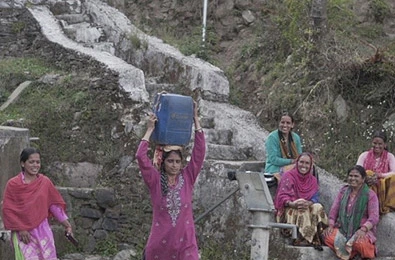
Searching for solutions
How a Tata Trusts’ intervention helped resolve a long-standing water crisis in Uttarakhand
Read More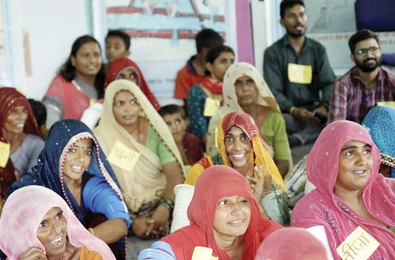
Water wisdom fuels a world of change
Water is the most valuable of resources and its optimal use is vital in every way — that’s the learning absorbed in overflowing measure by 20,000-plus households in 350 ‘water-secure’ Rajasthan villages
Read MoreOne Water, One Community
From rainfall to rivers to springs to groundwater, water may appear in different forms, but it is all part of one interconnected cycle. Managing these sources in isolation is not enough to secure water for the future.
The One Water, One Community approach recognises that sustainable water security depends on managing all water resources together, while empowering communities to take collective responsibility for protecting and sustaining them.
Across India, Tata Trusts works with communities, local institutions, and partners to build solutions that strengthen access to safe drinking water, restore water sources, and promote responsible water use, ensuring that every drop supports both people and ecosystems.
Planning for Water Security
Water security cannot be achieved through isolated efforts. It requires communities to understand their water resources, plan their use carefully, and work together to protect and sustain them.
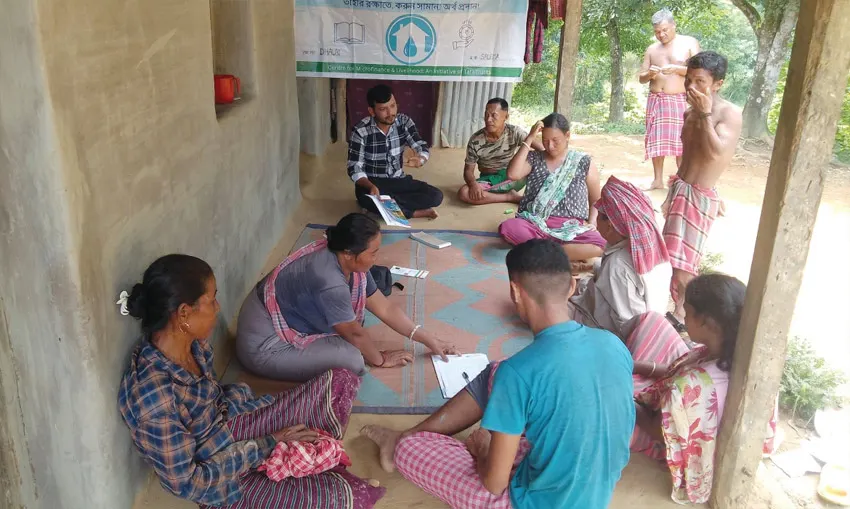
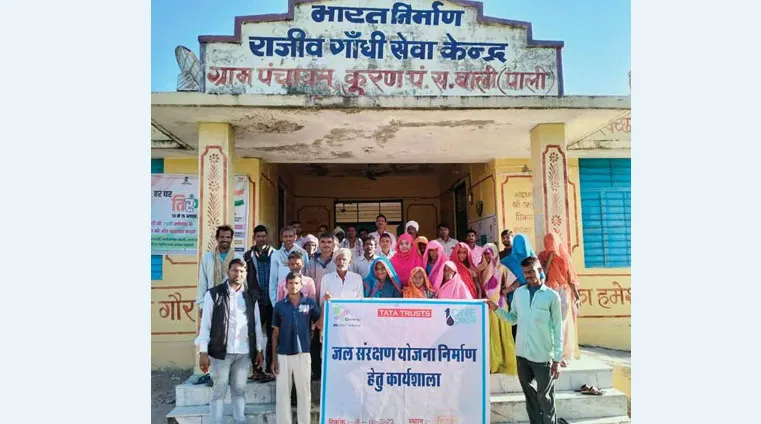
In many parts of India, changing rainfall patterns and increased climate variability are placing additional pressure on already-stressed water systems. Through Water Security Planning, communities assess how much water is available, how much is needed, and how it is used across households, agriculture, livestock, and livelihoods. By mapping local sources and identifying gaps between demand and availability, they can create practical plans to conserve, recharge, and manage water more sustainably.
When communities plan together, water stops being a recurring crisis and becomes a shared responsibility, helping them build resilience in an increasingly uncertain climate.
Explore more about Tata Trusts’ work in strengthening water security across communities in India.
Water Wisdom