Financial literacy can help rural women move beyond account access to claim rights, detect fraud and lead family finances with confidence as migration reshapes rural homes
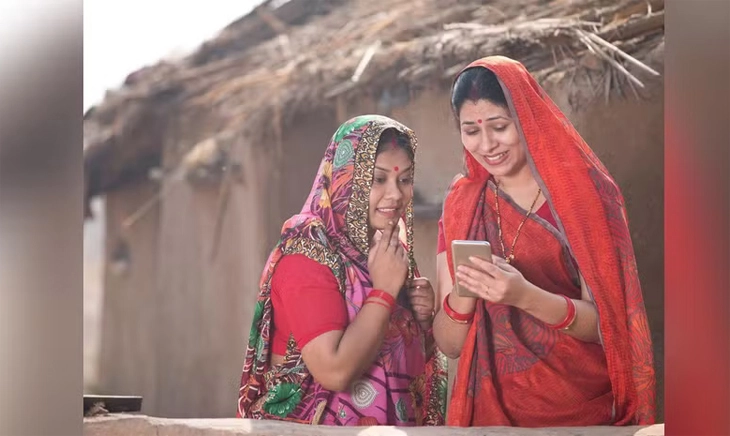 |
| The real promise of financial inclusion begins when a woman realises she has the power to make informed financial choices | Image: Canva |
When Kalibai first noticed that ₹25,000 had disappeared from her bank account, she said nothing. A few weeks later, when another ₹15,000 was gone, she still said nothing. It was not ignorance that kept her silent — she had stood in that queue, updated her passbook, done everything she was supposed to do. It was something harder to name: the certainty, built over a lifetime, that a woman from her village in the Aravalli foothills of south Rajasthan did not have the standing to question a bank official. Then she attended a financial literacy meeting organised by Shram Sarathi, a grassroots financial empowerment organisation supported by the Tata Trusts. There she met Kamla, a Shram Sarathi community advisor, who later came to her home for a one-on-one consultation. She sat with Kalibai, went through her passbook line by line, and taught her the language to name what had happened, and the knowledge that she had every right to say so. It took patience and the trust that comes from one woman speaking to another. But something shifted.
Kalibai went back to the bank not just to retrieve what was taken, but to demand accountability. When the official finally came to her home to return the money, she told him she did not want it — she wanted to file a case. The woman who had once been too hesitant to speak had become someone the system could no longer ignore. Her story is not an exception. It is quietly ordinary — which is precisely what makes it matter.
For generations, as men have moved to cities to work at construction sites, hotel kitchens or as daily wage labourers, women have stayed back to tend the fields, care for families, and manage the money that finds its way home. What has changed is the scale. Circular migration has become a defining feature of rural economies and, with it, an unacknowledged reality — that women are now the primary managers of their families’ financial lives. The feminisation of agriculture and care work is the ground truth of millions of households.
They are already doing the work. Remittances, VB-GRAM G (Viksit Bharat — Guarantee for Rozgar and Ajeevika Mission Gramin) wages, insurance claims, government disbursements — women queue at banks, negotiate with correspondents, and juggle documents to keep households afloat. What they are too rarely given is the knowledge, confidence, and institutional support to manage with authority. The stakes of that gap are rising. India's digital financial ecosystem is expanding fast, but the same acceleration that brings opportunity brings exposure. Sophisticated fraud, phishing calls, and opaque microfinance schemes disproportionately target those newest to the system. Financial literacy among Indian women stands at around 24 per cent[1], dropping sharply in tribal regions. Account access without financial confidence is not inclusion. It is exposure.
This is the gap that philanthropy is uniquely positioned to fill. Governments can open accounts and markets can build products, but philanthropy can do what neither is designed for: sit with a woman in her home, go through her passbook line by line, and help her understand not just what the numbers mean but that she has the right to question them. That requires an institution with the patience for trust-building, commitment to local language and reality, and the vision to see rural women not as beneficiaries but as leaders.
True inclusion is not transactional but transformational. Organisations like Shram Sarathi reflect that conviction — that the most meaningful investment is not in bank accounts and digital apps, but in the confidence and community that make them matter. They work across tribal communities in south Rajasthan, for instance, treating financial literacy not as a curriculum but as a community practice. Their modules, in local languages and grounded in women's real questions, cover passbook reading, fraud identification, insurance claims, and digital transactions. Women who complete the training become community advisors and mobilise community members, where stories are shared, irregularities are challenged, and isolation is replaced by collective knowledge. They are also furthering access to digital services by making women banking correspondents and digital entrepreneurs. This helps women earn independent incomes and shows every woman that the financial system is something women not only navigate but also lead.
India's ambition for a Viksit Bharat finds its most powerful expression in moments like Kalibai's — when a woman who once stood silent walks into a bank and demands her rights; something that millions of women in India’s villages are ready to do, too. When philanthropy, government, and community move together with shared intent, this stops being exceptional and starts becoming inevitable. Scaling that convergence by embedding financial literacy, fraud protection, and women’s empowerment into the fabric of rural programmes is the opportunity before us.
The real promise of financial inclusion begins when a woman realises she has the power to make informed financial choices.
— By Ravinderjit Singh, Head of Rural Upliftment, Tata Trusts.
The article was published in Business Standard and Financial Express on 22 June, 2026.
