Sowing Hope in the High Himalayas
Sonam Angchuk’s Journey from Survival to Self-Reliance
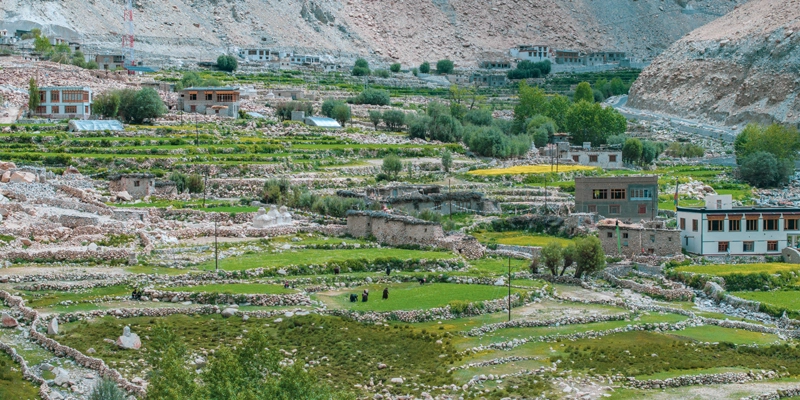
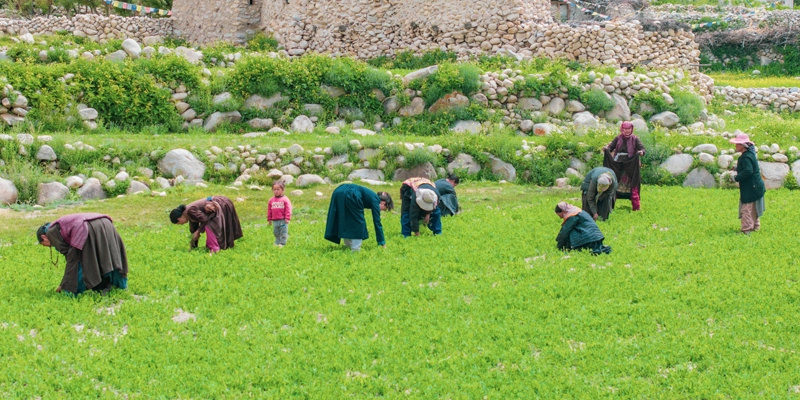
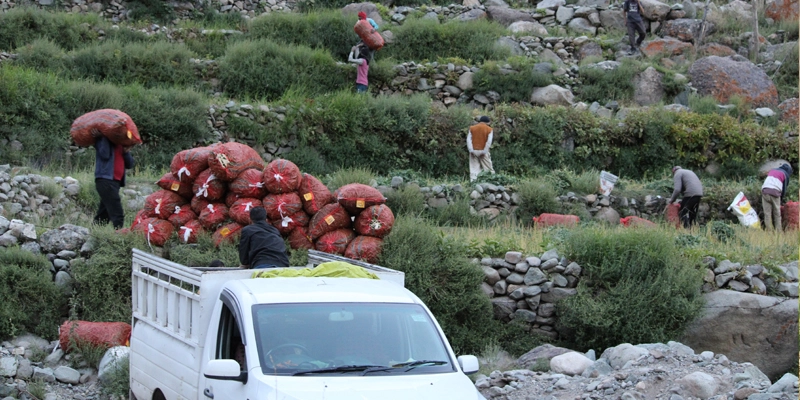
Nestled deep in the stark and stunning Rong Valley of Ladakh, where jagged mountains kiss the sky and icy winds whisper through fields, lies the remote village of Kungyam. Life here is beautiful but unforgiving. Short summers, harsh winters and a fragile ecosystem define the rhythm of this land.
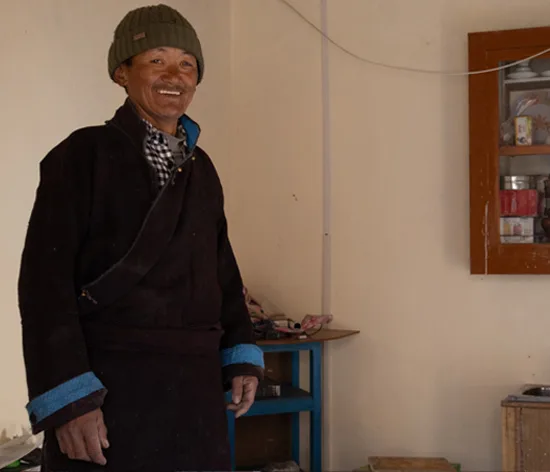
In the heart of this rugged terrain lives Sonam Angchuk, a 57-year-old farmer with weathered hands, but an unshakeable spirit. For Sonam, farming isn’t just an occupation, it’s a legacy, a commitment to the land passed down through generations.
“I was born with soil under my nails,” Sonam says with a gentle smile. “Farming gives me my identity, it’s who I am, but it hasn’t always been easy.”
A Life Before the Turning Point
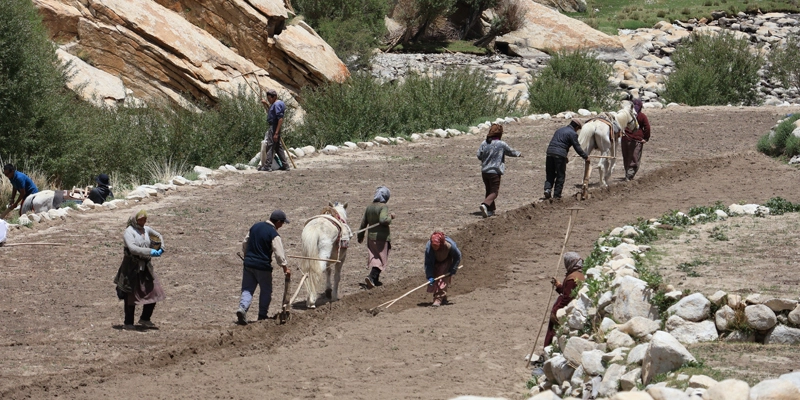
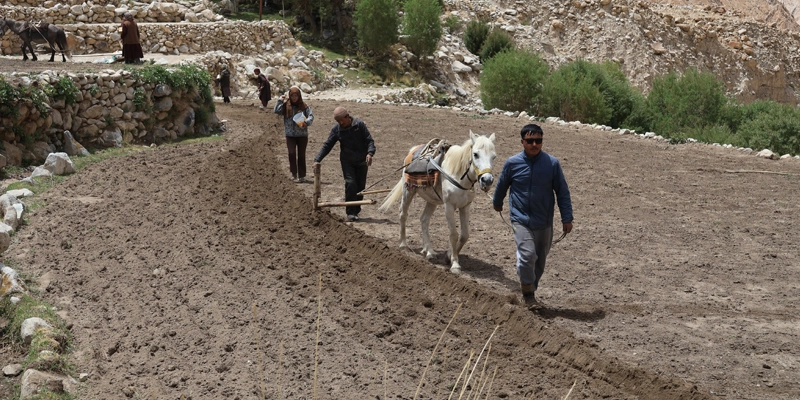
Barley and mustard were the mainstays of Kungyam’s fields—resilient crops that fed the family but earned little. The predominance of traditional farming methods in Ladakh yields lower productivity compared with modern agronomic techniques.
With three children studying in the city, Sonam and his wife worked tirelessly just to keep things afloat. “Some years, the harvest would barely cover our needs. I hated depending on my children for money,” he shares. “It felt like I had failed at something I had done my whole life.”
A Seed of Change
Just when Sonam thought farming might never change, a new possibility appeared in the form of Tata Trusts’ Maximising Himalayan Agriculture Initiative. In 2020, the Himmotthan Society, with support from Tata Trusts and NABARD, facilitated the formation of a Vegetable Farmer Producer Organisation (VFPO) in the region. The VFPO enabled farmers to access high-yielding quality seeds, reduce unit costs through bulk procurement, and establish stronger market linkages. In 2024, the initiative received further support from the Axis Bank Foundation.
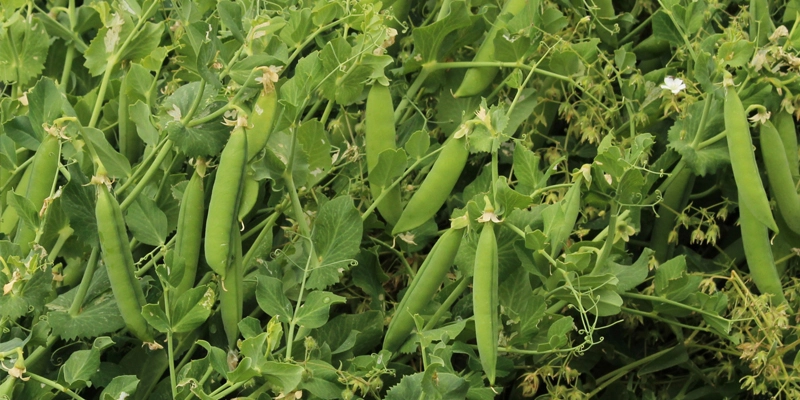
At first, Sonam was sceptical. Farming peas in Ladakh? It sounded risky. But something about the training sessions delivered by Himmotthan Society sparked curiosity. “I remember sitting in the awareness session and learning that green peas could thrive here in August and September—just when the rest of the country stopped producing. That was my moment of hope,” Sonam recalls.
He listened. He learned. And most importantly, he decided to try.
A New Chapter in the Fields
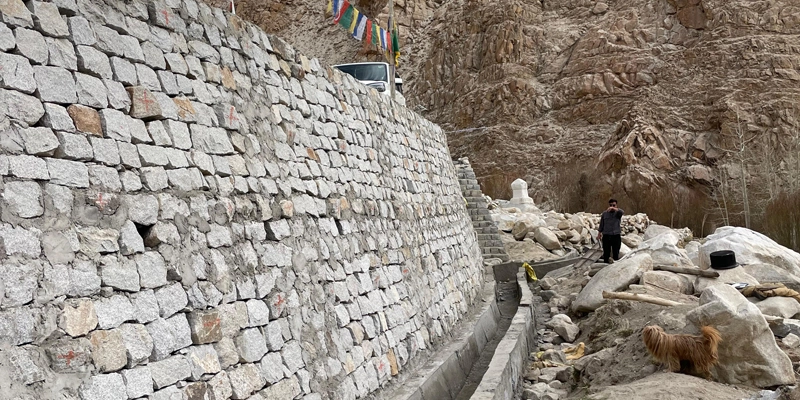
In 2024, Sonam sowed his first crop of green peas. To support irrigation for the village’s farmers, Himmotthan, with assistance from Standard Chartered Bank, developed a diversion-based canal from the glacial-fed river that flows near the village. With guidance on sustainable farming, improved irrigation facilities, collective marketing, and the sheer strength of being part of a producer group, things seemed easier and hopeful than ever. He watched his field come alive like never before.
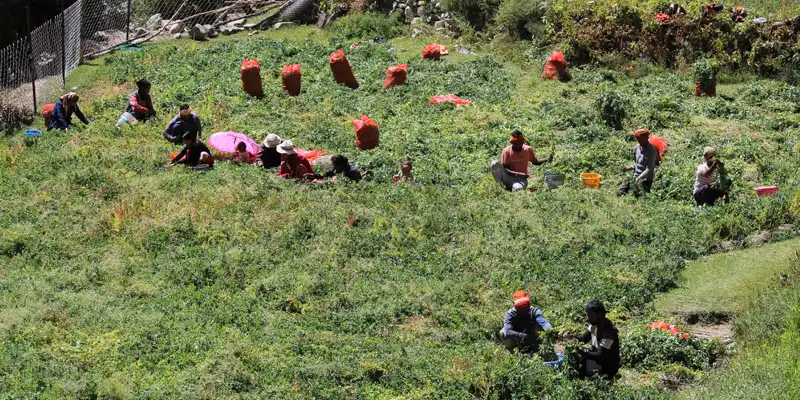
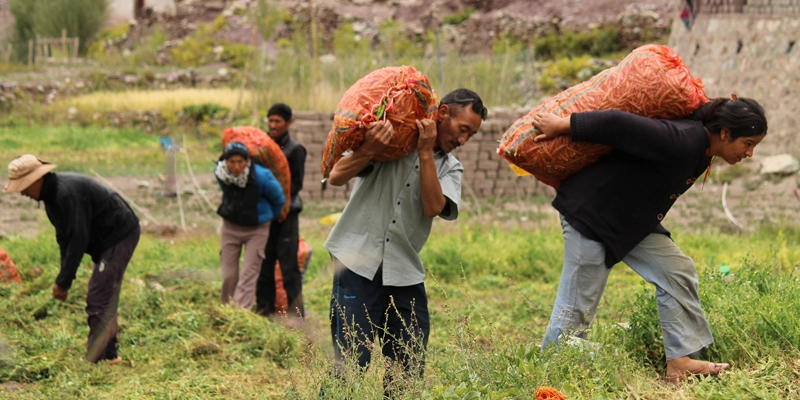
“When I saw the first green pods, I felt like I was witnessing a miracle,” he says. That year, Sonam harvested 1,300 kilograms of green peas, earning ₹78,000—more than he had ever made from barley, mustard, and potatoes combined. For the first time in years, he didn’t have to ask his children for help. “I felt proud—like I was able to stand on my own two feet again,” says Sonam proudly about his feat.
A Step Beyond Livelihood
The change wasn’t just financial—it was personal. It was in Sonam’s eyes - a new confidence, a new purpose.
Today, Sonam is not only expanding his fields but also inspiring others. He is encouraging neighbouring farmers to join the VFPO, sharing his story of hope with humility, at village gatherings, and encouraging others to embrace new crops and methods.
“I want Kungyam to be known not just for its beauty, but for its innovation. We can be a model village—farming smart, farming together,” he says with quiet conviction.
A Future Rooted in Possibility
Sonam’s journey is a powerful reminder that even in the most remote corners of the country, transformation is possible—with the right support, timely knowledge, and a willing heart. His success offers a pathway for others to follow—where traditional wisdom meets modern innovation for a brighter, sustainable future.
Through the VFPO, supported by Tata Trusts and implemented by Himmotthan Society, farmers in Ladakh’s high-altitude villages are embracing sustainable practices, diversifying crops, and strengthening their livelihoods.
As Sonam gazes over his green fields framed by snow-dusted peaks, his words reflect both resilience and optimism, “Life here is still hard. But now, it is filled with hope.”
—Written by Dhanishta Tiwari from the Communications Team at Tata Trusts, with inputs from Samten Choephel of Himmotthan Society.
Know more about the project: Tata Trusts’ Maximising Himalayan Agriculture Initiative (MHAI), is a five-year project (2023-2028), which aims to strengthen agriculture and allied value chains across identified clusters, and expand successful models into new geographies. The initiative focuses on enhancing productivity, market linkages, and economies of scale, anchored through strong Producer Groups (PGs), Farmer Producer Organisations (FPOs) and Farmer Producer Companies (FPCs). One of the key objectives is value chain development of seven major products, viz. pulses and nutri-cereals, high-value crops, seed production, orchards/nurseries, beekeeping, apricot, and agri-allied products (woollen handicrafts and dairy). The initiative works to build both backward and forward integration to achieve the objective. MHAI is implemented by Himmothan Society, and covers 800 villages across 20 blocks in 12 mountain districts of Uttarakhand, Himachal Pradesh and Ladakh.
In Ladakh, the initiative covers 40 villages across 10 administrative blocks of Leh and Kargil districts, with the aim to directly benefit 4,000 tribal families in three clusters—Lower Sham Valley (west), Changthang (east), and Kharu (central). Leveraging the Ladakh's unique climatic conditions, the project is promoting green pea (off-season vegetable) production for income generation.
Explore topics
Agriculture