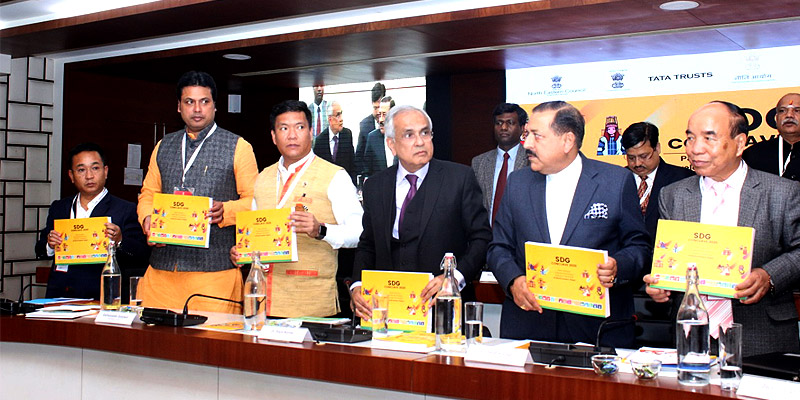
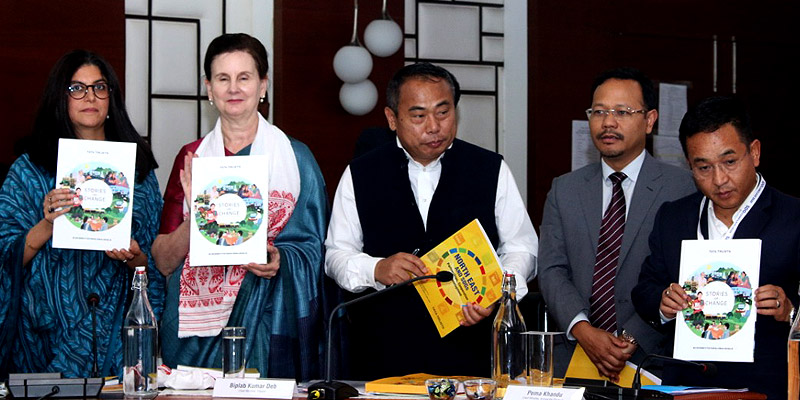
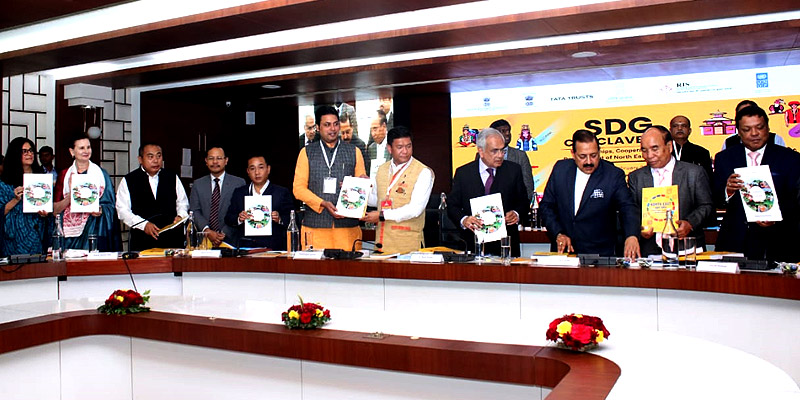
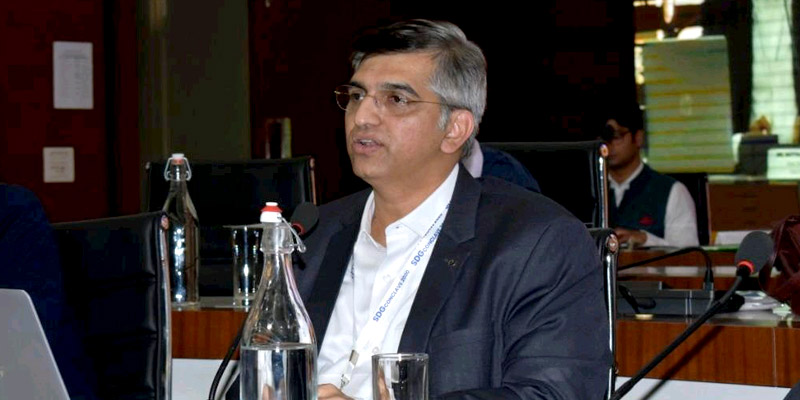
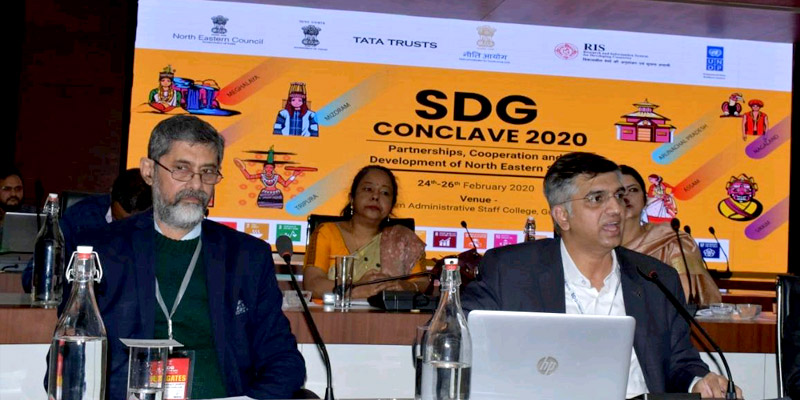
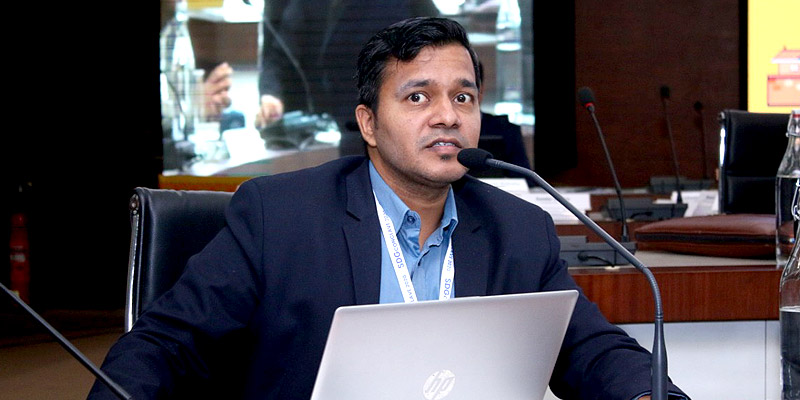
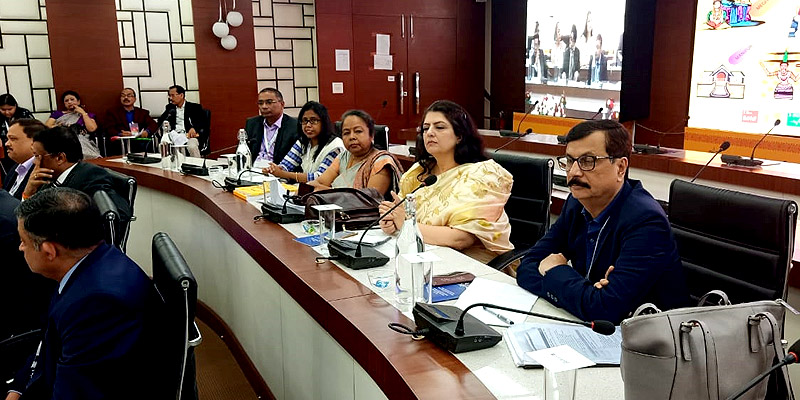
The last week of February was quite eventful for the city of Guwahati as leaders from various spheres gathered to participate in the North East Sustainable Development Goals Conclave 2020. Jointly organised by NITI Aayog, North Eastern Council, Government of Assam and Tata Trusts, this conclave aimed at identifying solutions as well as accelerators for the implementation of SDGs in the North Eastern Region (NER). It was held at the Assam Administrative Staff College in Guwahati from 24-26 February 2020.
The Tata Trusts worked closely with the organising partners in curating the content as well as in organising the conclave which was attended by chief ministers of eight north-eastern states, senior officials from NITI Aayog as well as other senior government officials, academia and civil society organisations.
The three-day conclave was supported by the United Nations Development Programme (UNDP) and Research and Information System for Developing Countries (RIS).
The inaugural session commenced with an address by Shri Amitabh Kant, CEO – NITI Aayog, where he recognised that the North East region offers unique challenges and opportunities. “The solutions need interventions that bring disruptive change; thus, fostering a tech-embedded development trajectory is of paramount importance,” he emphasised. He was followed by a welcome note by Dr Himanta Biswa Sarma, Minister – Finance, Health & Family Welfare, PWD, Transformation & Development, Government of Assam.
Setting the context, Dr Rajiv Kumar, Vice Chairman – NITI Aayog, made the opening remarks where he mentioned that, “The work that the Tata Trusts have done together with NITI Aayog has greatly impacted the country’s journey towards achieving the SDGs. It is also important to localise the SDGs in achieving the goals by 2030.” He focused on the need to mainstream the North Eastern Region in the national development agenda, and emphasised the need to identify state-specific and region-specific priorities as key to SDG localisation. Ms Renata Lok-Dessallien, UN Resident Coordinator in India, who followed him, pointed out that the North East Region is India’s bridge to South East Asia, and that this presents immense opportunity for trade and commerce.
The objectives and outcomes of the conclave:
- Determining the key factors which can help multiply the progress on SDGs on par with the better performing states
- Identifying factors within the region causing continuing deprivations amongst certain groups and communities, including women, and ways to resolve them
- Strengthening partnership between the Centre (including central PSUs) and states in furthering the SDGs, with particular emphasis on strengthening impact of centrally sponsored schemes and projects, involvement of central PSUs in the states’ efforts and in knowledge and capacity building support
- Strengthening partnership with the private sector, with special emphasis on encouraging the private sector initiatives already on the ground to contribute to SDG implementation; expanding projects supported by the CSR funds on SDG achievement in the North East; and infusion of innovation and new technology
- Strengthening partnerships at the local level with Panchayati Raj Institutions (PRIs), Urban Local Bodies (ULBs) and civil society, coordinated through districts to achieve the SDGs.
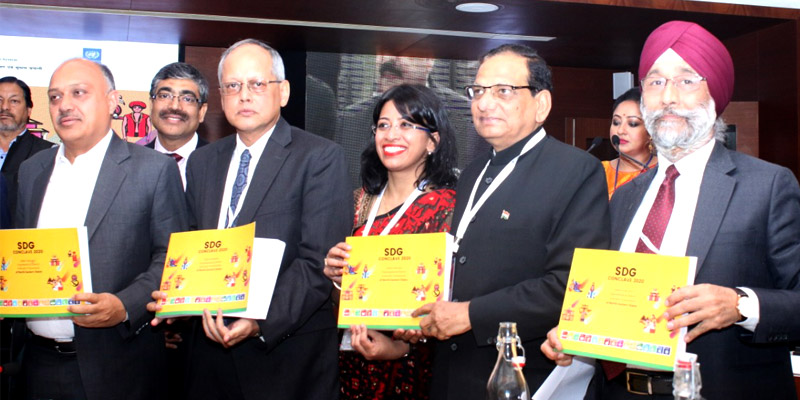
A key highlight of the conclave was the release of reports on challenges, prospects and SDG best practices. There were four reports released during the event – Compendium of State Indicator Framework of 8 North Eastern States; North East and SDGs by RIS and Tata Trusts; Stories of Change by Tata Trusts; and Best Practices Portfolio on North East by UNDP.
The conclave ended with a shared perspective on taking collaborative steps towards improving innovation, cooperation and partnerships for sustainable development. The participants were enthused about the deliberations that ensued and the recommendations that were made during the technical sessions over the three days of the conclave. Here’s what they had to say: