


Page 43 - Tata-Trusts-Annual-Report-2022-23
P. 43
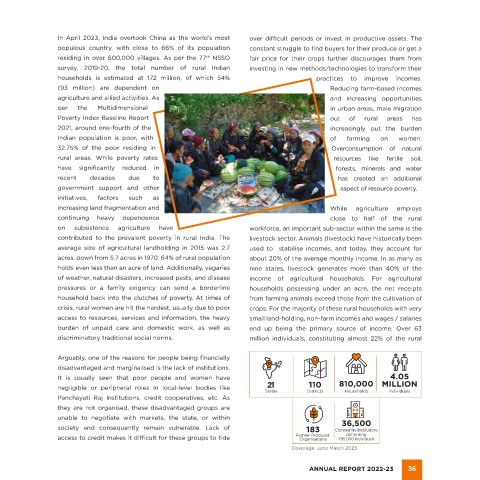
In April 2023, India overtook China as the world’s most over di cult periods or invest in productive assets. The Going forward, elements like bio-protection, conservation mobilisation, technical training/skilling and imparting
populous country, with close to 66% of its population constant struggle to find buyers for their produce or get a of biodiversity, geo-tagging of local varieties and enterprise management knowledge. Key components of
th
residing in over 600,000 villages. As per the 77 NSSO fair price for their crops further discourages them from regenerative agriculture will also be introduced in the such programmes may also include providing start-up
survey, 2019-20, the total number of rural Indian investing in new methods/technologies to transform their programme design. Conservation agricultural practices toolkits, digital literacy for record keeping and facilitating
households is estimated at 172 million, of which 54% practices to improve incomes. like zero tillage, cover cropping, intercropping, natural market connections. Another non-farm initiative has been
(93 million) are dependent on Reducing farm-based incomes farming, etc. are expected to be adopted in a community-based tourism programme, which is built
agriculture and allied activities. As and increasing opportunities larger numbers. around the idea of creating custodianship of the natural
per the Multidimensional in urban areas, male migration and cultural heritage within the community. The emphasis
Poverty Index Baseline Report out of rural areas has is on creating authentic, immersive and meaningful
2021, around one-fourth of the increasingly put the burden experiences for the guests that bring forward the
Indian population is poor, with of farming on women. uniqueness of each place, comprising cultural heritage,
32.75% of the poor residing in Overconsumption of natural folklore, gastronomy, local landmarks, and wildlife. This
rural areas. While poverty rates resources like fertile soil, inculcates sensitivity in the minds of the visitors and
have significantly reduced in forests, minerals and water contributes to the rural community managing a
recent decades due to has created an additional sustainable livelihood, while also developing pride in
government support and other aspect of resource poverty. their heritage.
initiatives, factors such as
increasing land fragmentation and While agriculture employs
continuing heavy dependence close to half of the rural
on subsistence agriculture have workforce, an important sub-sector within the same is the
contributed to the prevalent poverty in rural India. The livestock sector. Animals (livestock) have historically been
average size of agricultural landholding in 2015 was 2.7 used to stabilise incomes, and today, they account for
acres, down from 5.7 acres in 1970. 64% of rural population about 20% of the average monthly income. In as many as Apart from the climate change that impacts
holds even less than an acre of land. Additionally, vagaries nine states, livestock generates more than 40% of the the farm-based economy, another important aspect
of weather, natural disasters, increased pests, and disease income of agricultural households. For agricultural shaping the rural economy is the aspirations of rural
pressures or a family exigency can send a borderline households possessing under an acre, the net receipts communities. The ambitions of rural youth have changed
household back into the clutches of poverty. At times of from farming animals exceed those from the cultivation of significantly as they are equally exposed to a
crisis, rural women are hit the hardest, usually due to poor crops. For the majority of these rural households with very market-based, global economy as their urban
access to resources, services and information, the heavy small land-holding, non-farm incomes and wages / salaries counterparts. To keep pace with the changing aspirations
burden of unpaid care and domestic work, as well as end up being the primary source of income. Over 63 and requirements of rural communities, as well as the
discriminatory traditional social norms. million individuals, constituting almost 22% of the rural changing economy and environment, the Trusts’ Rural
Upliftment Portfolio has also expanded over time to
Arguably, one of the reasons for people being financially include non-farm-based livelihoods like skilling,
disadvantaged and marginalised is the lack of institutions. entrepreneurship, tourism, crafts, and non-timber forest
It is usually seen that poor people and women have 4.05 produce in its programmes. Major initiatives in livelihood
negligible or peripheral roles in local-level bodies like 21 110 810,000 MILLION generation through skilling disadvantaged rural
States Districts Households Individuals
Panchayati Raj Institutions, credit cooperatives, etc. As communities and enabling entrepreneurship have been
they are not organised, these disadvantaged groups are taken up, particularly in Uttarakhand and Rajasthan. In
unable to negotiate with markets, the state, or within Assam, Nagaland, Odisha, and Andhra Pradesh, handloom
36,500
society and consequently remain vulnerable. Lack of 183 Community Institutions programmes have been initiated. Nurturing non-farm
comprising
access to credit makes it di cult for these groups to tide Farmer Producer 795,000 individuals micro-enterprises is achieved through village-level
Organisations
Coverage upto March 2023
ANNUAL REPORT 2022-23 36

