The holiest offering: How Vanageri made education its truest worship
When overcrowding left children studying in corridors, the villagers from this Karnataka village chose to invest their faith in education, using temple funds to build new classrooms.

In India, where temples rise from almost every street corner and faith holds a sacred, immovable place in people’s lives, the idea of turning temple donations into a school might seem improbable. But in the small village of Vanageri in the Koppal district of Karnataka, something extraordinary happened.
This wasn’t a headline moment. There were no mics or dignitaries. Just a village, a school and a belief: that children deserve more than just prayers for a better future.
A novel leadership
School Development and Monitoring Committees (SDMCs) are central to shaping schools, nurturing children and strengthening learning environments.
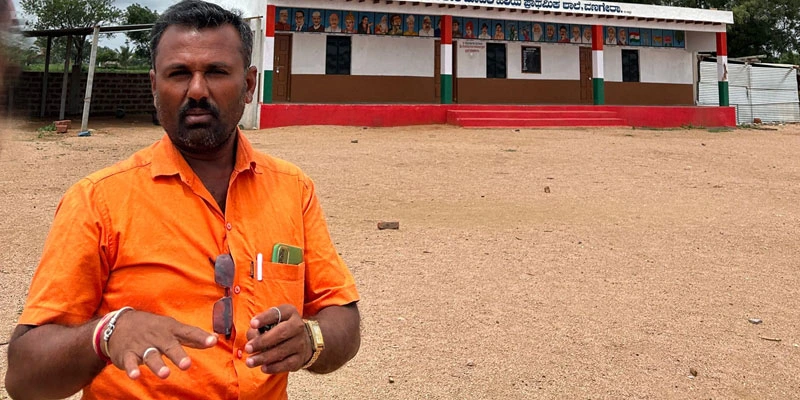
The spark was ignited in August 2022 with the formation of the SDMC in the Vanagere Government Higher Primary School. At its helm was Hanumantappa Madar, a farmer and father whose child studied in the same school. His motivation was simple yet powerful. He wished to create a better learning environment not just for his own child, but for every child in the village. As the SDMC President, he believed that Vanageri’s children deserved more than what the school’s limited space could offer.
The school which serves about 350 students, was expanding rapidly. With the introduction of pre-school classes and an English-medium Class 1 alongside the existing Classes 1–8 in the last academic year, the school seemed to be overcrowding and facilities falling short for the enthusiastic children. Many students studied in corridors due to the shortage of classrooms.
Concerned, the SDMC turned to the one place where every villager already gave generously: the Shivanammadevi temple.
When faith funded education
What followed was nothing short of sacred. The temple trust donated Rs25 lakh towards building the school. With this, the SDMC built four new, sunlit classrooms, not just walls and roofs, but spaces of possibility.
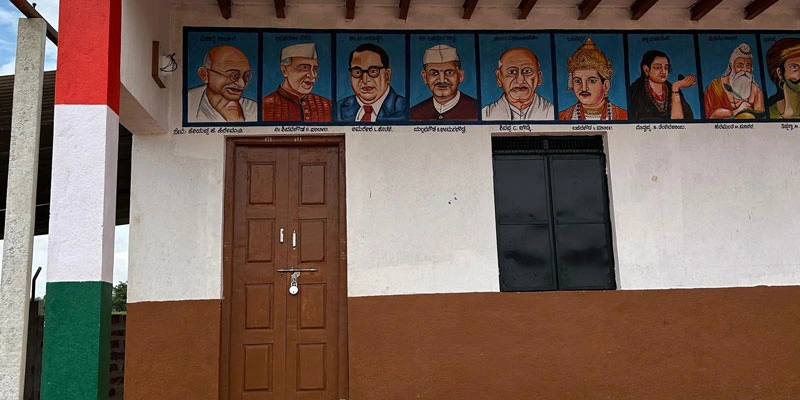
Families, too, came forward. Some gave as little as Rs500, a modest sum, yet enough to have their favourite freedom fighter or national hero painted on the school wall, with the family name beneath it. Not for vanity, but for legacy .
That wall now tells the story of the school: “We built this. This is for our future.”
The SDMC invested heavily in learning materials to strengthen early education. Teachers’ offices were equipped with chairs and cupboards, a new flagpole was built for assemblies, and the community came together to beautify the school.
Every small act added up. A village that once waited for the authorities to bring about change was now shaping it on its own.
Tata Trusts’ catalytic role
This transformation was shaped and strengthened by Kalike, an organisation supported by the Tata Trusts, under its Foundational Literacy and Numeracy (FLN) programme in Koppal.
Kalike strengthens SDMC and promotes community participation in school development through exposure visits and trainings, helping them understand their rights, duties and ways to support schools.
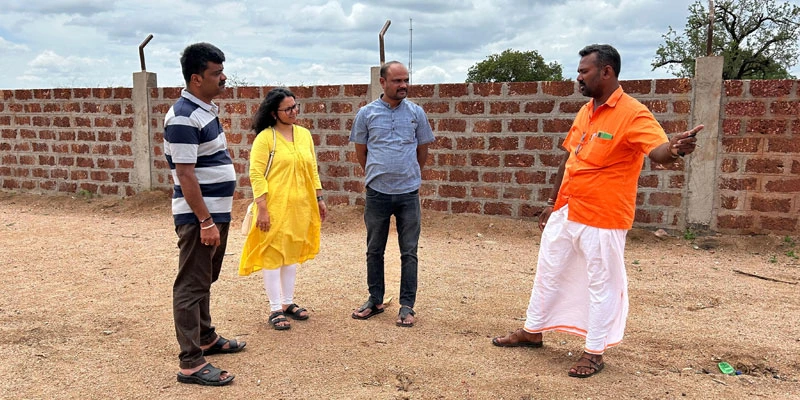
Like many other SDMC members in Karnataka, Madar benefited from Kalike’s exposure visits that deepened his understanding of school management and community mobilisation. The visits became a turning point, shaping his approach to leadership and inspiring the confidence to rally the community towards bringing meaningful change.
Over the last few years, Kalike has been working with the Department of School Education to strengthen 300 SDMCs across Koppal, Kushtagi, and Yadgiri blocks. Through exposure visits, peer learning, and training on community mobilisation, the SDMC core members have been equipped to lead the change.
These efforts have sparked action across villages, and Vanageri is one such story.
Madar himself credits these visits as a turning point:
“I always had the desire to do something meaningful for my village children but lacked proper guidance. Exposure visits showed me how other SDMCs were making a difference. I gained confidence that we, too, could bring development step by step.”
Kalike is also helping the school with a dedicated space for library activities and committing to future educational initiatives, ensuring the school benefits not only from infrastructure improvements but also from innovative learning resources.
A model for many
The SDMC’s efforts went beyond constructing classrooms. From successfully securing land from the Education Department to advocating for continuity by submitting a formal request for a secondary school in the village, to leveraging government schemes and NGO partnerships, the results are visible in a more robust, stronger parental participation, and a renewed community vision of education.
The Vanageri story is proof of what happens when catalytic support meets local ownership.
And Vanageri is not alone. Inspired by such examples, more than 55 schools across Kushtagi Taluk have now strengthened their SDMCs. Communities have mobilised funds, tapped into schemes, and invested in both infrastructure and learning resources.
Kalike has played a crucial role in shifting mindsets from passive beneficiaries to active co-investors in education. In doing so, SDMCs are functioning as micro-governance units, ensuring that schools are not just constructed, but nurtured.
For anyone who cares deeply about education, the Vanageri story feels less like a project and more like a prayer answered, not through miracles, but through community, commitment, and courage.
Written by Samidha Shetty (Grant Finance, Tata Trusts ), who came across the Vanageri story during a field monitoring visit to Koppal and Kushtagi blocks in Karnataka. Engaging with local community members and SDMC representatives, she witnessed firsthand their commitment to improving school management. Inspired by the community’s collective resolve and Kalike’s catalytic role in empowering SDMCs, she documented this story of transformation.
Edited by Suvajit Mustafi (Brand and Marketing Communications, Tata Trusts)
Explore topics
Education