Seeds of Confidence
In Jadipani, Uttarakhand, smallholder farmer Reena is not just growing cabbages—she’s growing confidence, community, and a bright future

High in the folds of Uttarakhand’s mist-laced mountains, where clouds drift lazily over terraced slopes, lies the quiet village of Jadipani—a place where time moves with the seasons and farming practiced by generations.
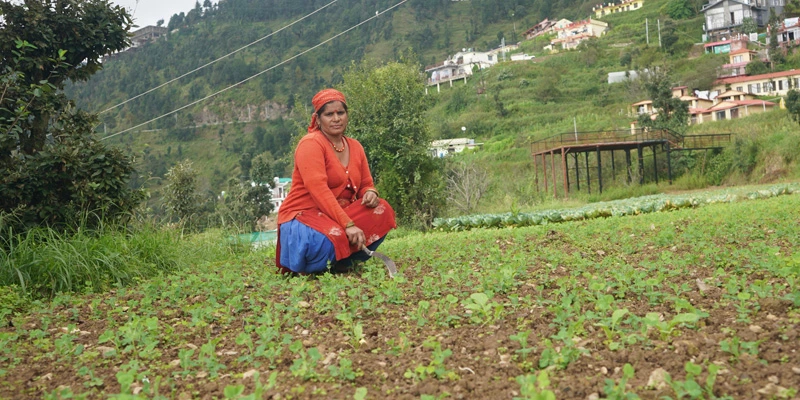
For years, Jadipani’s fields told the story of subsistence farming. Today, thanks to Reena Devi —a smallholder farmer, mother of two, and local innovator, those same terraces speak of resilience, sustainability and new beginnings.
A Life of Quiet Struggle
Reena’s world was once defined by limitations — of land, of opportunity, of choice. With just a small patch of land to her name and the responsibility of a five-member household, including an aging elder and two growing children, farming for her was never more than a means to scrape by.
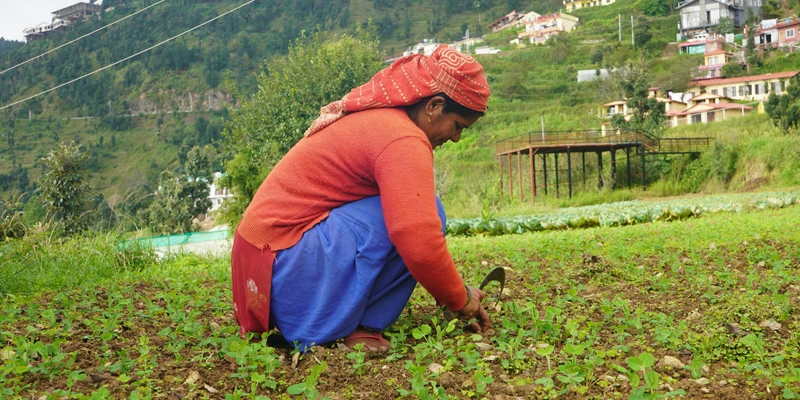
Her husband made a meagre living driving a rented vehicle, while Reena tended the farm on her own. With just two nalis of land, she planted cabbages using traditional methods and whatever seeds she could afford. The harvests were meagre, the markets too distant, and too often the fields lay fallow — not for lack of effort, but for lack of opportunity to turn hard work into income.
“It was backbreaking work,” Reena recalls. “I would walk for hours, carrying baskets of cabbages on my back, just to reach the nearest market. And too often, I returned home with a meagre amount.”
Her voice softens as she adds, “After a while, I stopped planting parts of my land. I couldn’t bear to see my effort and crops go to waste.”
The Winds of Change
That changed when the Tata Trusts’ Maximising Himalayan Agriculture Initiative (MHAI) came to Jadipani. An initiative co-funded by the Axis Bank Foundation under their Sustainable Livelihood Programme was implemented by Himmotthan Society (a partner NGO). The objective was to strengthen mountain farming systems by enhancing productivity, diversifying crops, and improving market linkages for sustainable livelihoods. What started as a series of field visits and informal conversations in 2023 bloomed into something far more structured and powerful.
Through on-field demonstrations, peer learning and scientific training, many smallholder farmers, including Reena were introduced to a new way of farming—where knowledge met technique, and crops were nurtured with precision and purpose.
“For the first time, someone explained why spacing between plants mattered,” says Reena. “I realised that farming could be smart, not just strenuous.”
She learnt how much seed was just enough, how to space plants for better yield, when to water, how to keep pests at bay, and how to nourish the soil without depleting it.
But the turning point wasn’t just in honing technique. It came in the form of a place: the Common Facility Centre (CFC) established nearby, which is now manged by the women led Farmer Producer Organisation promoted by the Tata Trusts in its earlier Livelihood project.
Here, Reena found what she needed most—a way to connect. The CFC offered collective aggregation, transport support, and market linkage, bridging the gap between the hill perched villages and the marketplace, and giving small farmers like her a powerful new voice.
“When I heard, I wouldn’t have to carry the cabbage to town on my own anymore, it felt like a weight had been lifted—not just from my back, but from my life,” she says with a laugh.
Scaling Up, Standing Tall
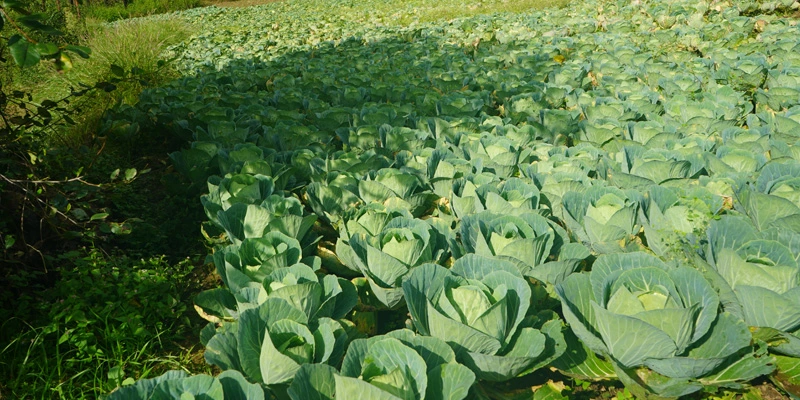
With confidence rooted in newfound knowledge and support, Reena made a bold move. She expanded her cabbage cultivation from two to six nalis—tripling her field area, halving her seed use per nali (now just 10–15 grams) and adopting every best practice she had learnt.
The result? A harvest of 2,700 kilograms of high-quality cabbage. Sold at ₹18 per kg, Reena earned ₹48,600 in one season alone.
“I had never seen so much cabbage in one place—my own land!” she says, beaming. “And it all came from a few good seeds and the right advice.”
After accounting for expenses, her net profit stood at ₹22,000—nearly double what she used to earn in an entire year of traditional farming.
“This was more than I had earned in several past seasons combined,” she shares. “And it happened in just three months.” She adds, “I didn’t just grow vegetables. I grew confidence. I grew pride.”
An Icon in Her Field
Today, Reena is more than just a farmer. She’s a guide, a mentor and a symbol of possibility for women in the Varsha Swayam Sahayata Samuh (Self-Help Group). Where she once worked quietly, she now speaks confidently — of soil health, crop calendars and the collective power of marketing.
She walks through her green fields with the kind of ease that only comes from transformation—both land and the self.
“I want other women to see that this is possible. We don’t need big farms, just big dreams and the right support,” says Reena.
This spirit lies at the heart of the Tata Trusts’ Maximising Himalayan Agriculture Initiative (MHAI)’ which is empowering thousands of households across Uttarakhand, Himachal Pradesh and Ladakh to turn small farms into landscape of prosperity.
A Landscape of Possibilities
Reena’s story is a reminder that farming is not just survival, it can be a story of success. When women are empowered with knowledge and networks, even the smallest farm can yield a hopeful future. And as her story spreads from household to household, across terraces and valleys, one thing is clear: the seeds of change have been sown.
Written by Dhanishta Tiwari from the Communications Team at Tata Trusts, with inputs from Akshit Kukreti of Himmotthan Society.
Know more about the project:
Maximising Himalayan Agriculture Initiative (MHAI) is a programme of the Tata Trusts being implemented by Himmothan Society. During the project period (i.e. September 2023 to October 2028), it aims to empower 35,000 households across 17 mountain clusters of Uttarakhand, Himachal Pradesh and Ladakh. The goal of the project is to transform subsistence agriculture practices into knowledge-based, technology–driven, sustainable, commercial agri-economy and social enterprising models. An end-to-end approach is being deployed to form sustainable farm-based value chain systems combined with non-farm income enhancement avenues. The project is co-funded by the Axis Bank Foundation under the ‘Sustainable Livelihood Programme’.