Foundations of learning take root in Assam
Supported by the Tata Trusts, schools in Assam are adopting new approaches to improve children’s foundational literacy and numeracy, ensuring stronger learning outcomes in the early grades.
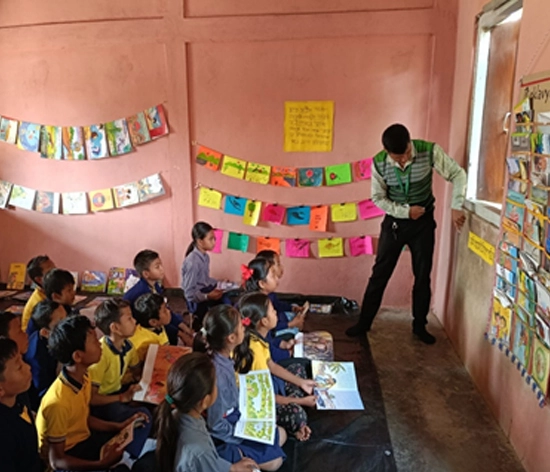
In the lower Assam districts of Baksa and Goalpara, several schools have begun demonstrating how small, consistent steps can make a big difference in improving children’s learning outcomes. Through the Tata Trusts’ Education programme these schools are adopting Foundational Literacy and Numeracy (FLN) strategies to ensure that every child achieves grade-appropriate competencies.
The programme is implemented by Trusts’ partner - Centre for Microfinance and Livelihood (CML), in collaboration with Samagra Shiksha, Assam. The initiative has been underway since October 2023 across 450 schools in the blocks of Tamulpur, Balijana and Srijangram in Baksa, Goalpara and Bongaigaon districts. The work focuses on improving classroom teaching and learning while bringing children who have dropped out back into school. Teachers across all targeted schools receive training, while in half of the schools CML facilitators provide weekly, on-ground support, along with library books and teaching-learning materials. Motivational camps are organised for identified out-of-school children to support their re-enrolment and return to regular schooling.
Across the state, schools are showing how practical interventions and sustained efforts can transform classrooms into engaging learning spaces. The following stories highlight how these changes are taking shape on the ground.
Adopting FLN strategies
Bhaishkhuli Lower Primary (LP) School in the Balijana block of Goalpara district has effectively adopted FLN strategies, helping children achieve grade-wise learning competencies.
Creating a print-rich environment: Initially, the school classrooms had limited printed material, some of it faded and placed too high for children to notice. Now, the doors, windows, furniture, in the rooms are well- labelled, with names on classroom objects and rules displayed at a child-friendly height. Early-grade students also take turns updating the day, date, month, and weather on a wall calendar. This engagement with print in everyday contexts is essential for literacy development, as it helps children understand that reading and writing have real, meaningful purposes.
Reviving the school library: Under the programme the Trusts provided 128 engaging storybooks, including six Big Books, to each of the intensive schools, including Bhaishkhuli Lower Primary School. The books are displayed in a theme-based reading corner, where teachers encourage reading during school hours. Children are often seen reading in this corner, participating in activities such as read-aloud sessions and storytelling. They also borrow their favourite books to take home, which is tracked in a book-lending register. Story retelling through role play and drama has become a regular part of their classroom activities.
Making mathematics engaging: A numeracy kit that includes a number line, Jodo blocks, currency notes, 3D connectors and a place value kit, was also provided under the project. Both teachers and children are now using these materials effectively to make mathematics learning more interactive, encouraging clarity of concept, while being enjoyable.
These initiatives have created a vibrant classroom atmosphere that encourages participation and builds children’s confidence in language and numbers.
A big step towards active reading
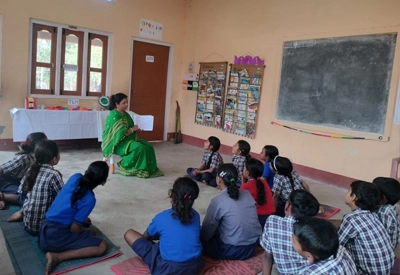 |
| Students at Sarivella LP School, Baksa, learning from their new storybooks. |
Sarivella LP School in Baksa district is in the north-eastern part of Tamulpur block. The school has four teachers and 70 students from Nowakhat and Sarivella villages.
Earlier, books provided by the government were kept inside boxes and cupboards, and students showed little interest in reading them. The project team introduced a new set of books selected based on the students’ learning levels, featuring engaging text and pictures. These books are now displayed creatively on tables, ropes, and in jute boxes, making them easily accessible to children.
Teachers are now conducting a variety of book-based activities like read-alouds, storytelling, book talks, treasure hunts, role plays, and reading sessions. Many students who previously struggled even to recognise the letters are now attempting to narrate stories by looking at the pictures in the books. The school also maintains a register for book lending, allowing students to take books home. Teachers have begun recognising that library books play an important role in strengthening language learning.
The school’s new reading culture has brought a sense of excitement to learning that goes beyond the classroom. It shows how access to engaging books and teacher-led reading activities can spark children’s curiosity and confidence in reading.
Motivational camps help Karimul Ali return to school
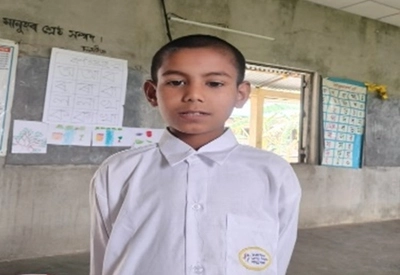 |
| After attending a motivational camp, Karimul Ali from Baksa district is back in school. |
Karimul Ali from Barbila village in the Tamulpur block of Baksa district is the youngest of three siblings, after two elder sisters. After his parents separated, he began living with his paternal grandmother and dropped out of school after grade 3, remaining out of the education system for two years.
In March 2025, Karimul attended a 10-day motivational camp organised at No 2 Barbila LP School. He participated regularly and showed keen interest in learning, particularly in reading and writing. As Bengali is his home language, learning Assamese at school was initially a challenge, further compounded by his long absence from school. Despite these hurdles, his enthusiasm for learning remained strong.
Following the camp, Karimul was enrolled in No 1 Barbila LP School in Grade 5. He now attends school daily and remains actively engaged in all school activities.
Building a stronger foundation
Stories like this show what structured, strategic, community-centric interventions can achieve. Tata Trusts and its implementation partner, Centre for Microfinance and Livelihood (CML) is helping teachers, students and schools rediscover the joy of learning. With simple tools, in all targeted schools stronger classroom practices and patient guidance, these schools are laying the foundations for lasting change.
