A ripple of confidence – how reviving a spring rebuilt a community’s agency
Collective action supported by technical intervention and institutional support helps a Tripura village on its journey towards water security.
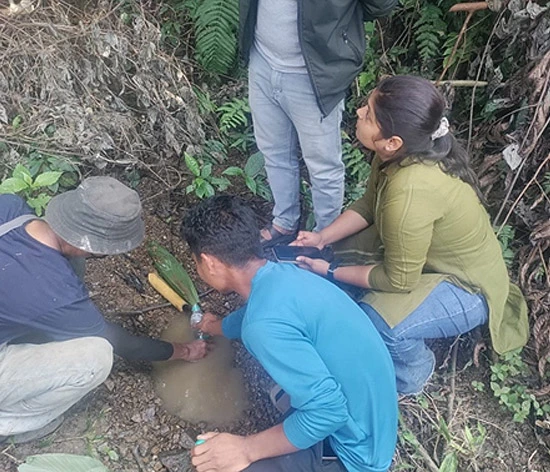
Vanlalsiama, a 65-year-old resident of the tribal village of Tlangsang-2 is a relieved woman today. Not long ago, she would wake up while it was still dark outside so she could wait her turn to collect water. Her back ached from carrying the water uphill, and she could never be certain that it was enough for the needs of their family of four.
Tlangsang-2 nestles among the Jampui hills of North Tripura and is home to a tribal community that depends largely on smallholding of land for agriculture and forest-based livelihoods. For the longest time, a single spring met the village's needs for drinking, cooking, basic household chores and livelihood (agriculture and livestock).
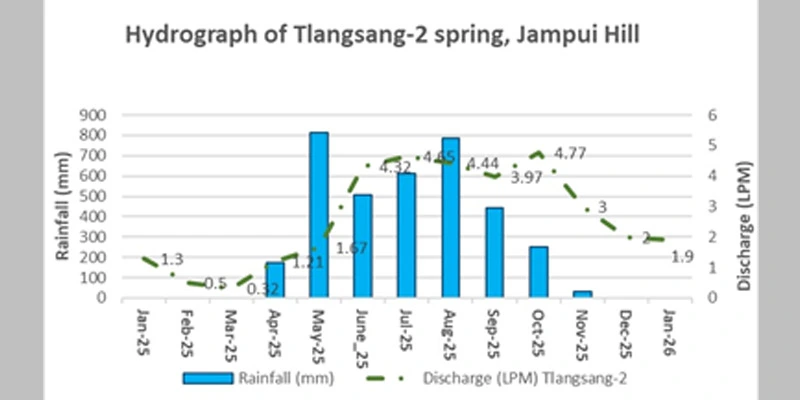
As years went on, reduced groundwater discharge and erratic rainfall patterns began to affect the spring’s flow. Discharge fell sharply from November to April, becoming a regular pattern. Vanlalsiama recalls waiting for nearly an hour to fill one bucket of water. The shortfall affected hygiene practices, livestock care, kitchen gardens and even overall household well-being. The dry months heightened tensions within households as families struggled to manage with little water.
Matters came to a head in early 2025. In January that year, the spring discharged 1.3 litres of water per minute. By March, the flow was just 0.32 litres per minute, a fraction of what was needed. The community was at a loss; they lacked the technical knowledge and institutional support needed to address the underlying hydrological causes.
Structured intervention
In early 2025, the Tata Trusts’ springshed management programme, delivered by the Centre for Microfinance and Livelihood (CML, an associate organisation of the Tata Trusts), brought a ray of hope to their village. The scientifically informed, community-owned intervention to revive the spring was never meant to be a short-term relief measure.
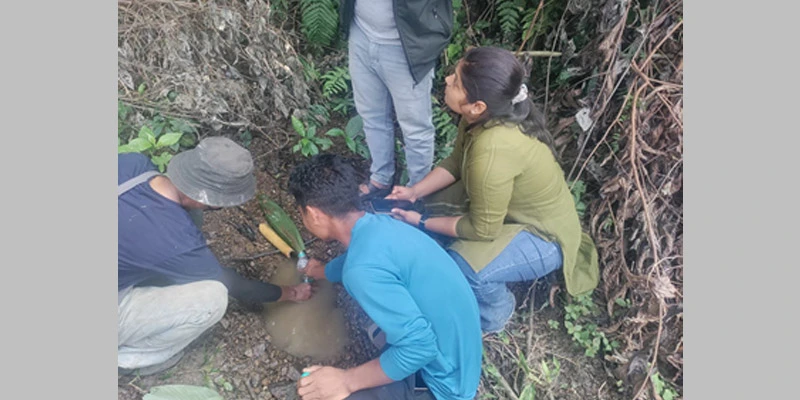
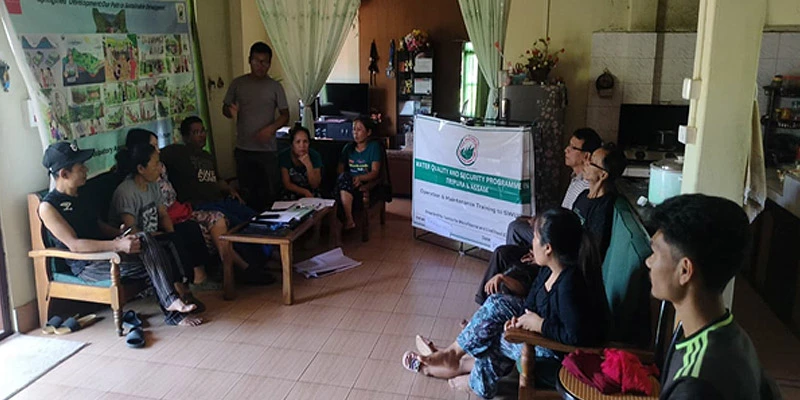
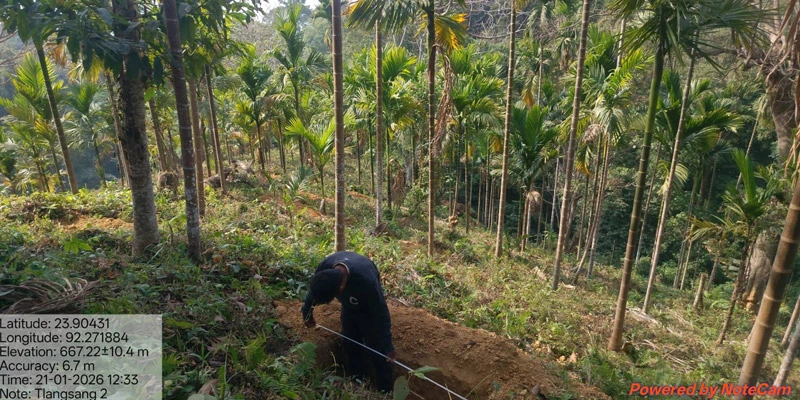
CML began to work closely with the villagers. As always, the need of the hour was to understand the underlying causes of the decline, so a detailed technical assessment of the recharge zone was conducted, followed by participatory planning exercises that supported the formation of a Spring Water User Committee. Working with the community, CML’s structured recharge plan focused on strengthening the spring at its source through catchment treatment and collective stewardship. This included:
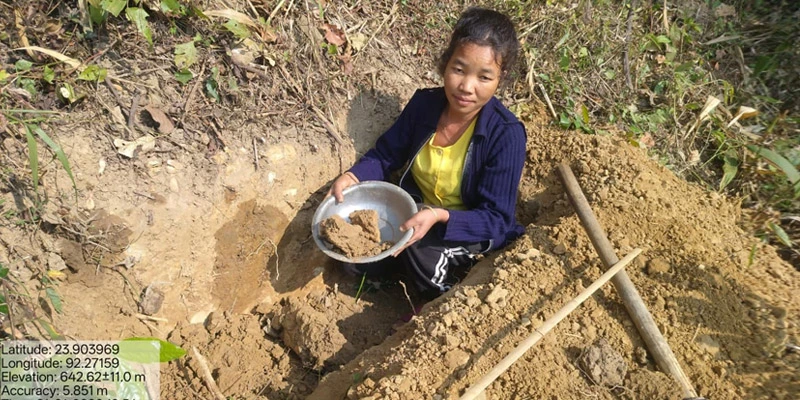
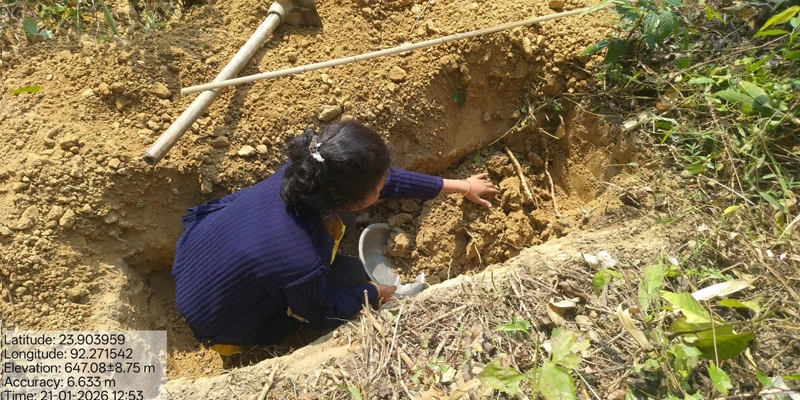
- Excavating 300 recharge trenches
- Treating 2.2 hectares of the recharge zone
- Strengthening a functional Spring Water User Committee
- Community members providing labour, monitoring and oversight
While the physical work and long-term stewardship rested with the community, Tata Trusts and CML teams provided technical guidance on trench design and placement, ensured the scientific alignment of the recharge strategy and facilitated regular monitoring of the discharge.
And before the monsoons of 2025, this strategic restructuring was implemented.
From seasonal scarcity to reliable productivity
The impact of this intervention was visible within months. Following the monsoon season, spring discharge increased fourteen-fold to 4.32 litres per minute in June, 4.65 litres per minute in July, and by October, water was flowing at 4.77 litres per minute.
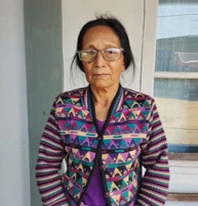 |
| Vanlalsiama now has a reliable, resilient communal water source |
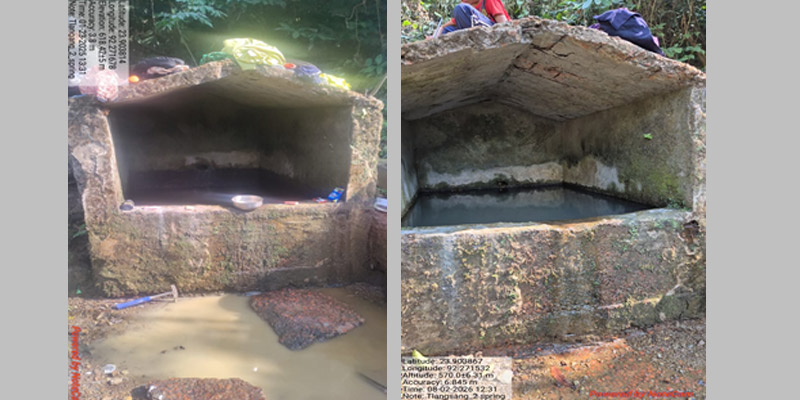
But the real test came during the lean season. In January 2026, the spring discharge measured 1.9 litres per minute, an increase of 46 per cent over the previous year. For the first time in recent memory, the spring chamber remained full during the dry months and overflowed during a period that had earlier brought scarcity.
For Vanlalsiama, this was a clear shift from seasonal scarcity to a more reliable, resilient communal water source. “I do not have to wake up in the darkness any more. Even at 7 am, there’s enough water,” she says, the relief evident in her voice.
The winds of change
The resurrection of the spring was not the only impact of this intervention. Women derived far more benefits than simply being able to secure sufficient water to meet their household and livestock needs. They took ownership of the intervention – 65 per cent of the labour force that excavated the trenches were women; they participated in planning meetings and shared detailed knowledge of seasonal water patterns. As Lalduhsaki, a member of the Spring Water User Committee, says, “This is our water, and we are its guardians now. Every month, we check the recharge area and ensure it is protected.”
The community now views the spring not as a fragile resource that could vanish, but as a shared asset that responds to collective care. They are committed to protecting the recharge zone from deforestation and unrestricted grazing. Systematic discharge monitoring has strengthened transparency and built trust in the process.
The emotional shift is clearly visible. The additional two to three hours women save each day are now spent on rest, livelihood activities and supporting their children’s education. Hygiene practices have also improved due to the reliable availability of water.
Community members report feeling less stress during the lean months. Where November once brought anxiety, it now brings cautious optimism. Their relationship with the spring has moved from dependence and dread to stewardship and hope.
Building confidence and resiliency
What changed in Tlangsang-2 was not just the spring’s discharge rate. It was also the community’s confidence to influence their own water security. Tata Trusts’ springshed management programme in this village demonstrated that scientifically designed intervention, combined with institutional facilitation and community leadership, can deliver measurable improvements even within fragile hill ecosystems. From distress water searches in November to an overflowing spring chamber in January, Tlangsang-2 offers a replicable example of community-led water resilience.
A modest technical intervention. Strong facilitation. Collective ownership. In Tlangsang-2, a spring began to breathe again, and with it, a community rediscovered its agency.
Explore topics
WaSH